Bermuda bound! Kind of...
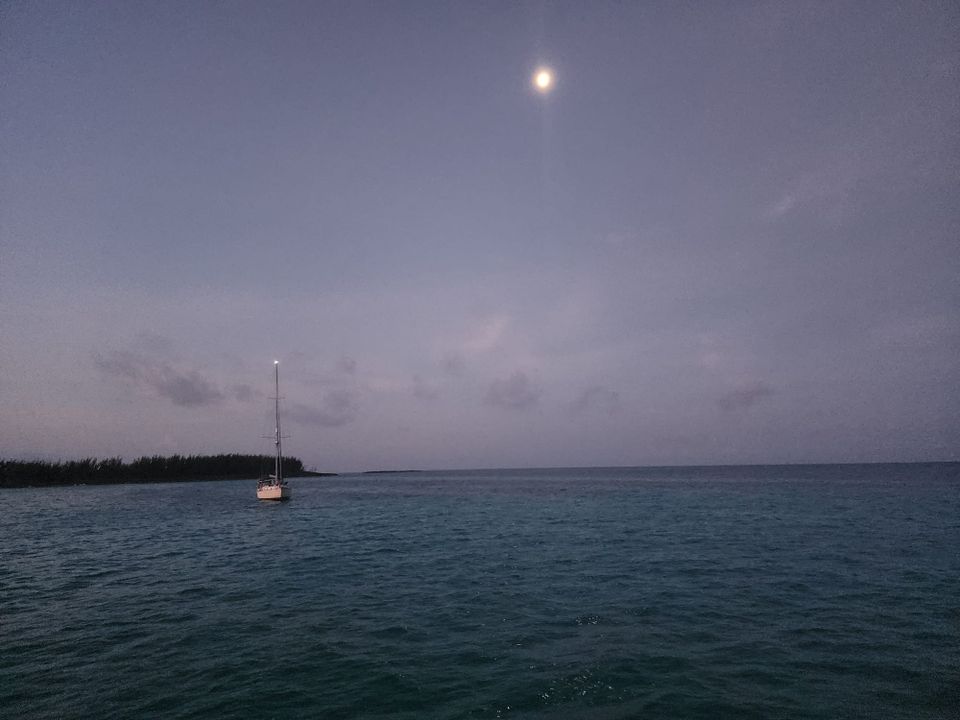
We awoke at the Egg Island anchorage, and the swell had settled down nicely. Everyone was facing north, the tide had changed (we were facing south yesterday).
There was a monohull anchored in front of us (now behind us). It had departed from Spanish Wells at the same time as us. We watched it sail in to the anchorage, no motor. That was hard core! It took them at least 5 tries, more than an hour, to get a good angle into the anchorage and then drop anchor.
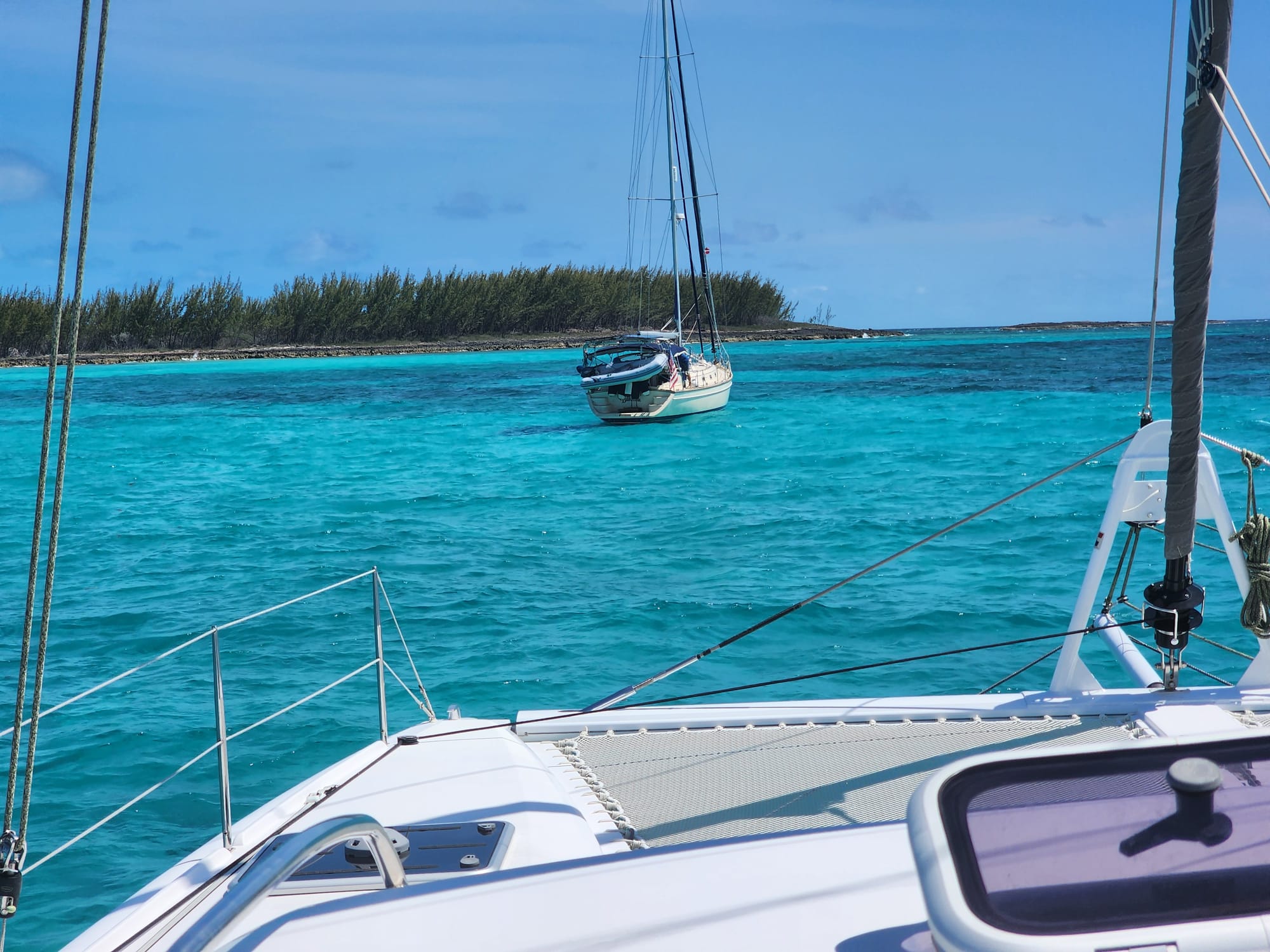
We checked the weather again. It still said no wind, but safe, so we decided to go. We were hopeful that we could at least find a little breeze to help us reduce the motoring.
As the tide changed direction and moved us around to the south, the chain managed to get wrapped around a rock. It took a little finesse with the motors to get the chain free and anchor raised, but thankfully nobody had to get in the water to untangle it.
Leaving Egg Island
How much breeze did we find? Sod all. We motored and motored and motored.
Motor-sailing from the Bahamas
The route took us north across the Northeast Providence Channel and along the east side of the Abacos.
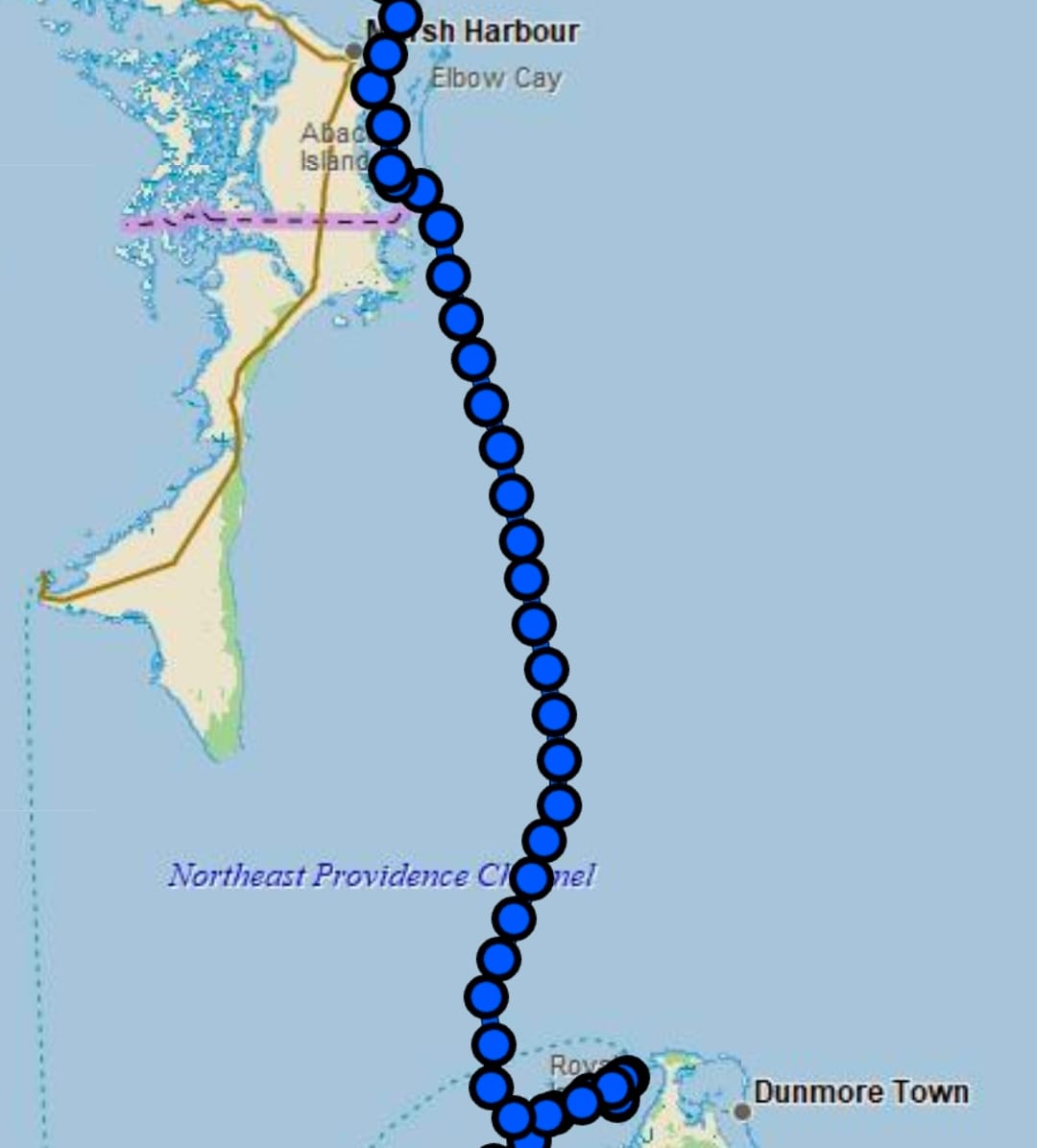
The day was absolutely uneventful. Without wind, the seas were super calm.
As we made our way north we grew concerned about the amount of fuel we were burning. The engines are small and fairly efficient, but the fuel tank is also small. We were down to just half a tank, and we still had 6 days ahead of us until we reached Bermuda. We had 4 jugs of spare fuel on board, but that's only about half a tank worth. Who knows how much more motoring we would need to do between the Bahamas and Bermuda?
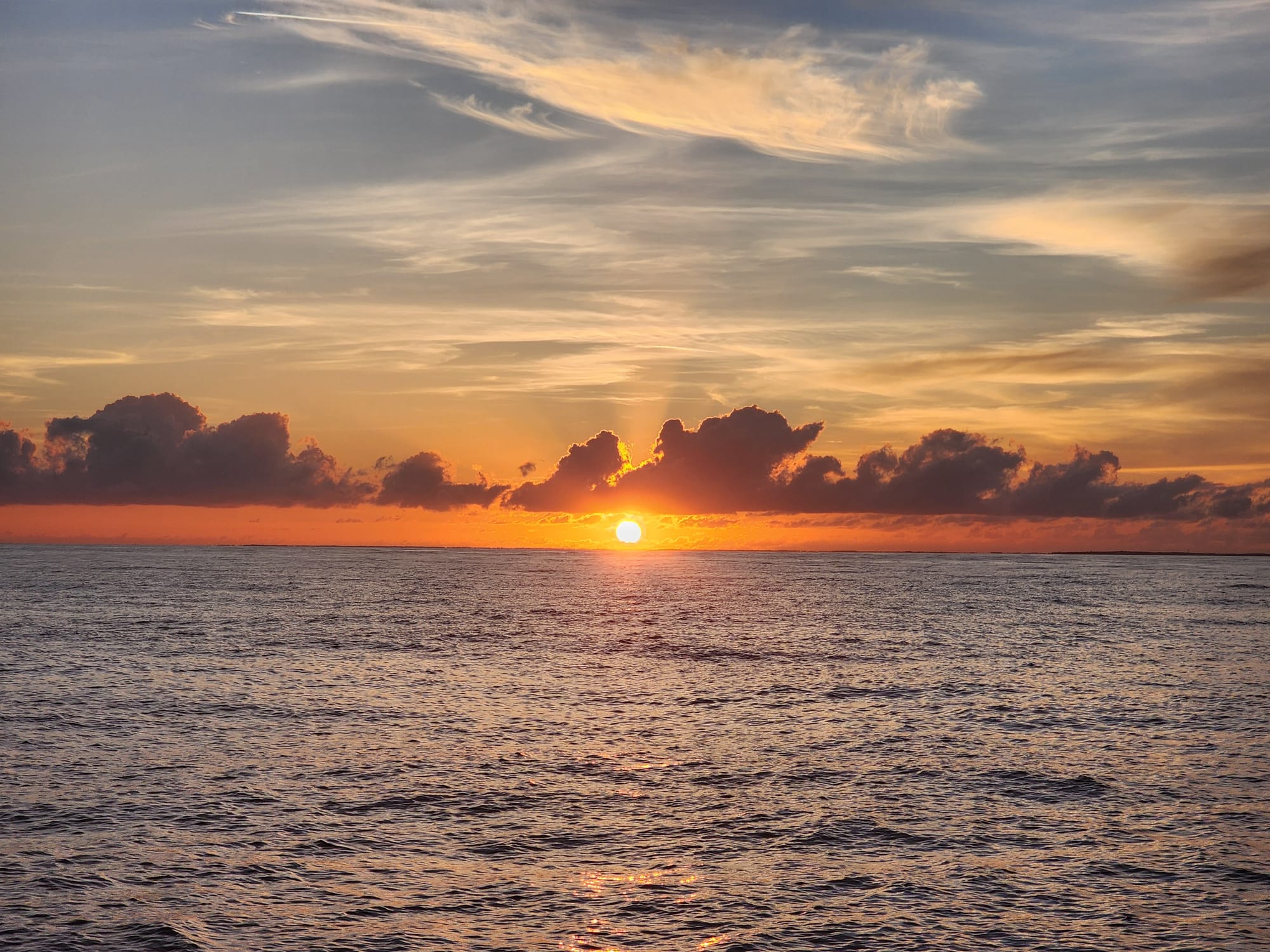
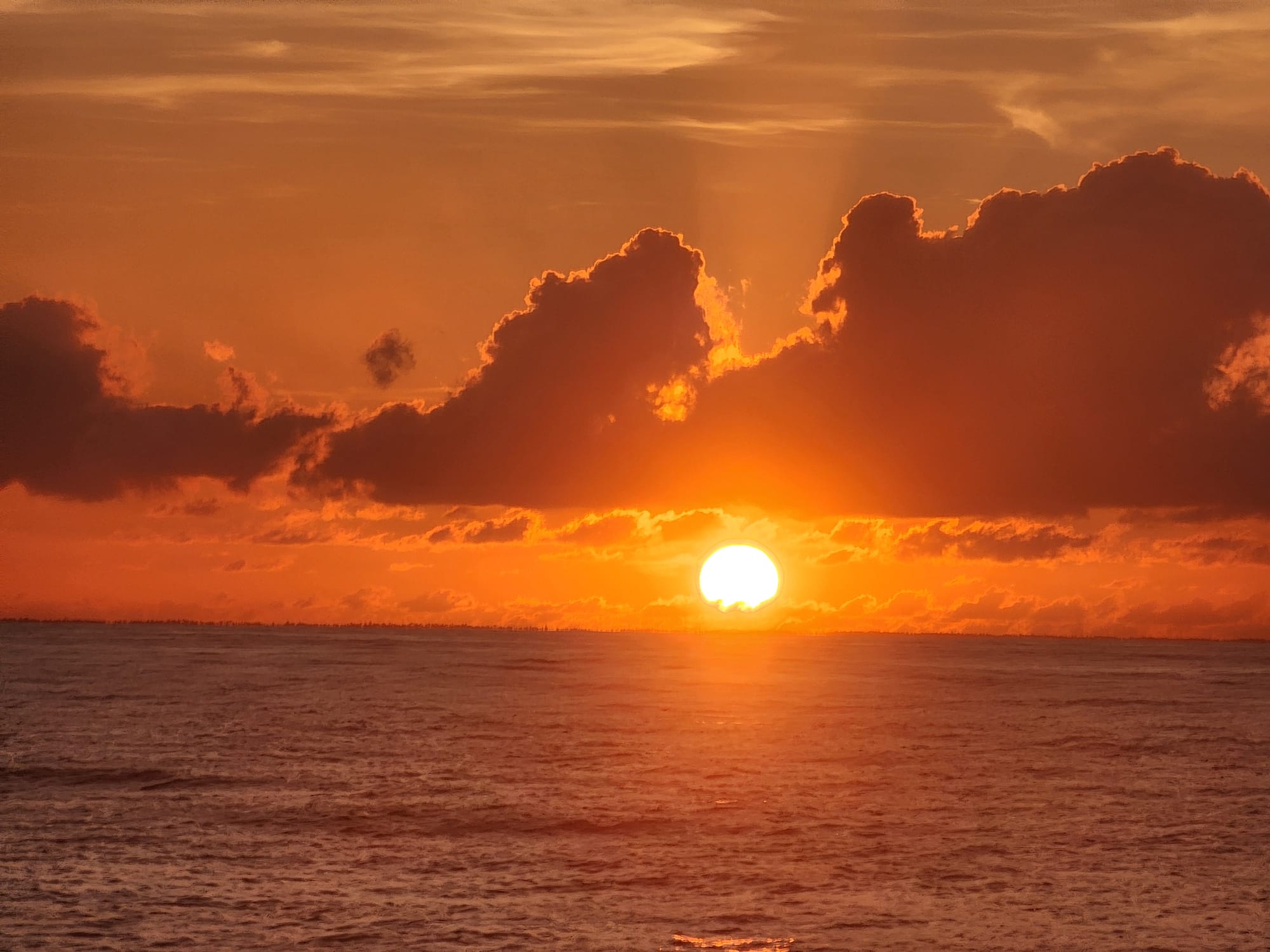
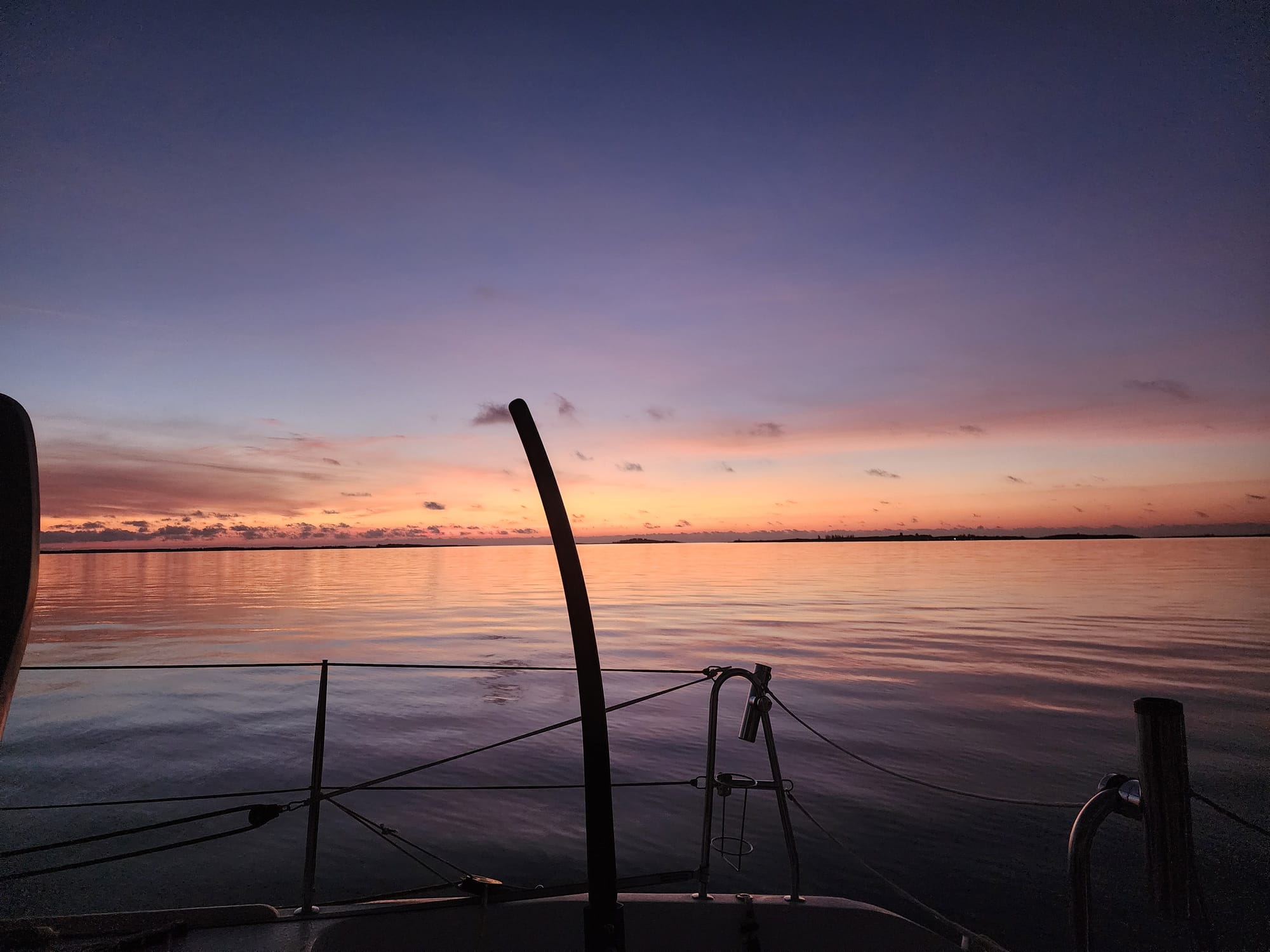
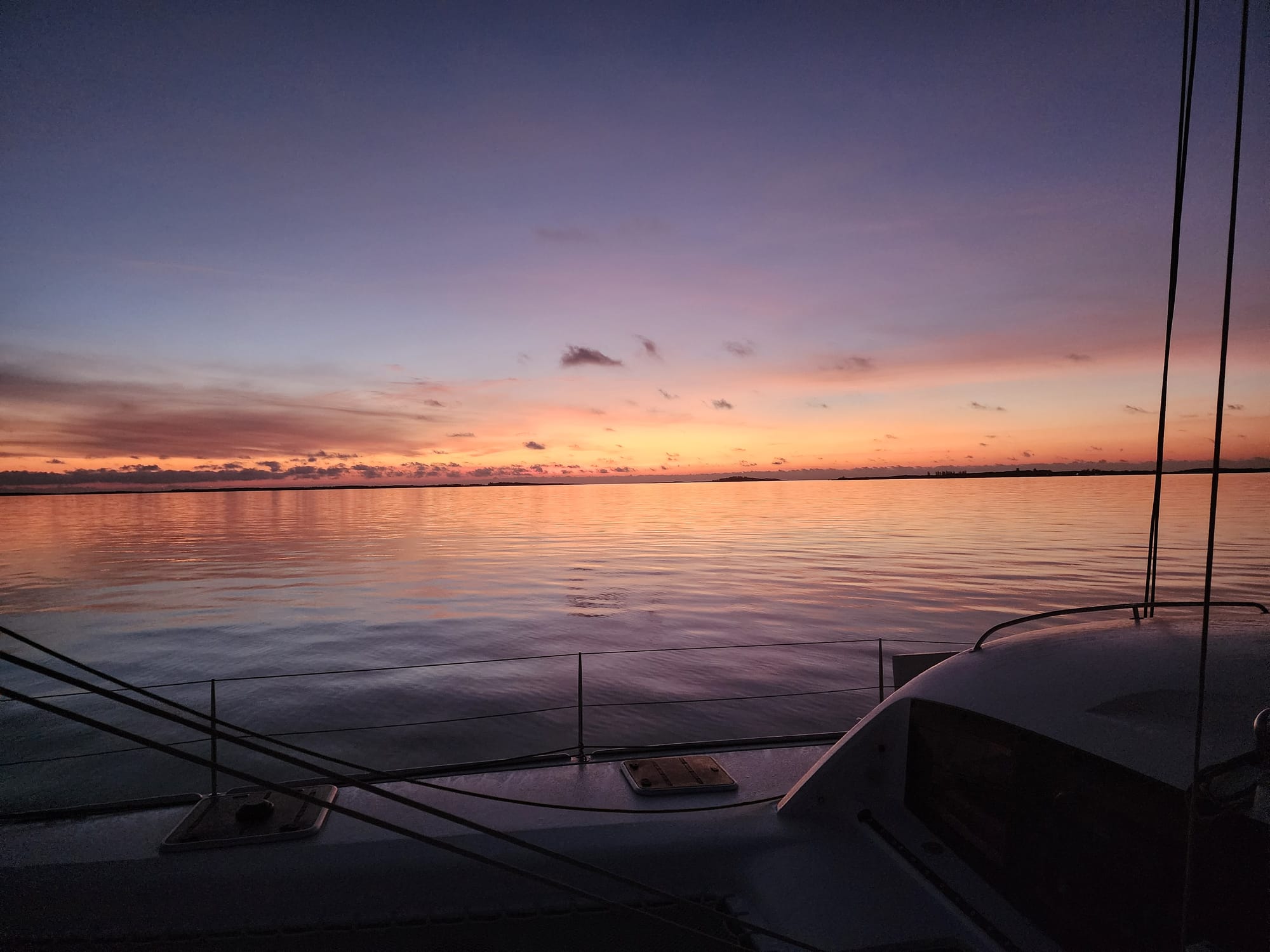
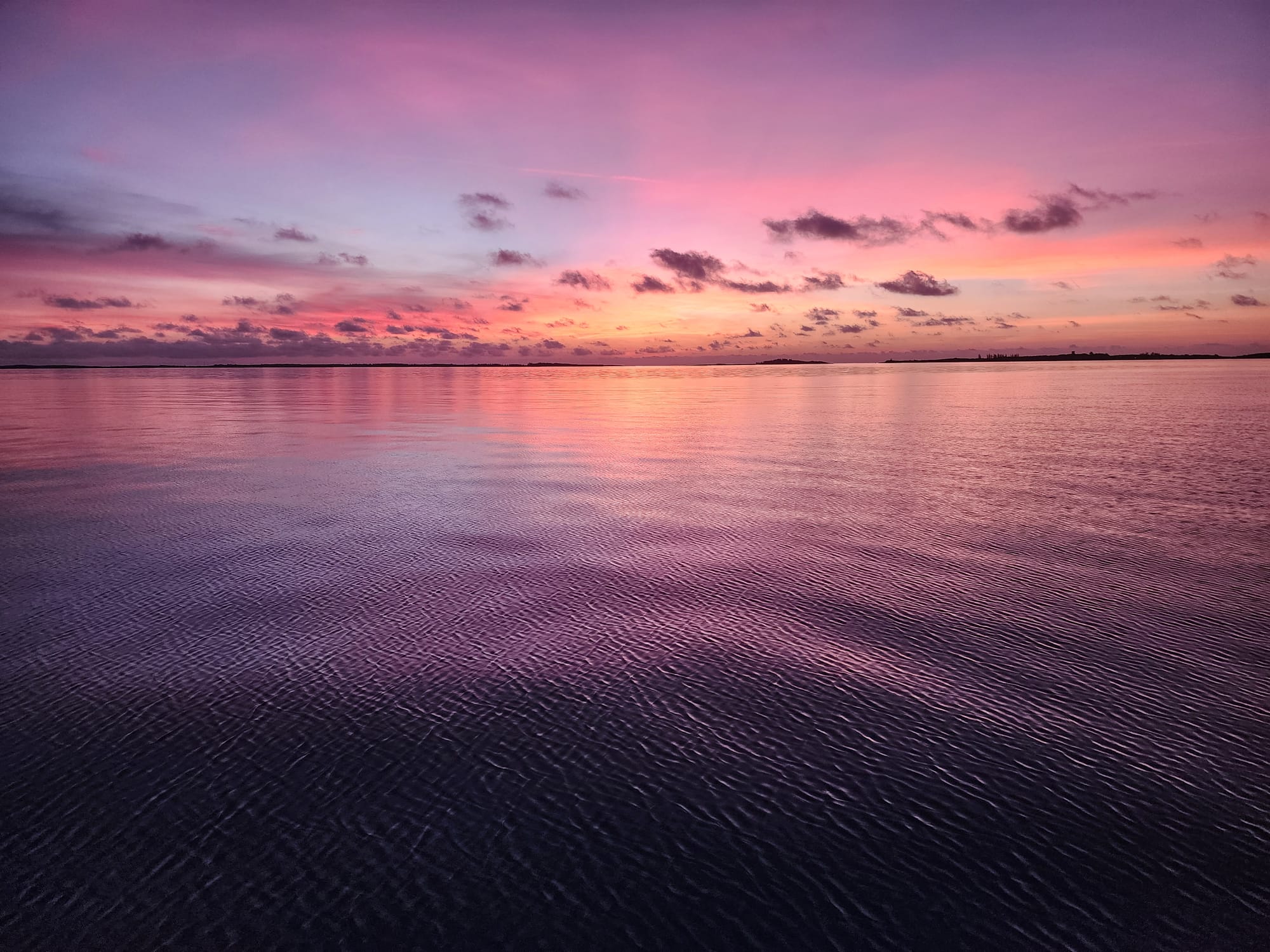
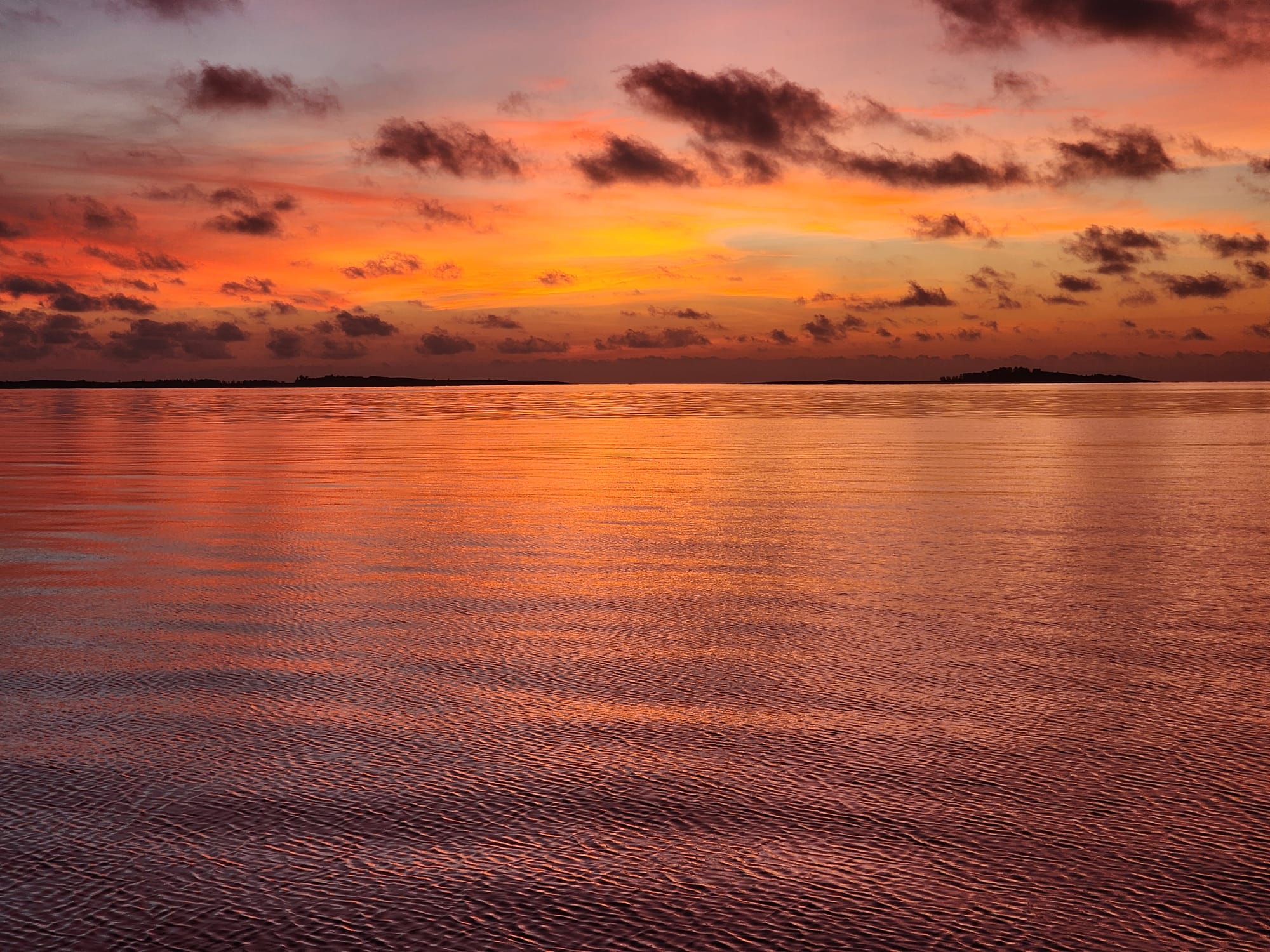
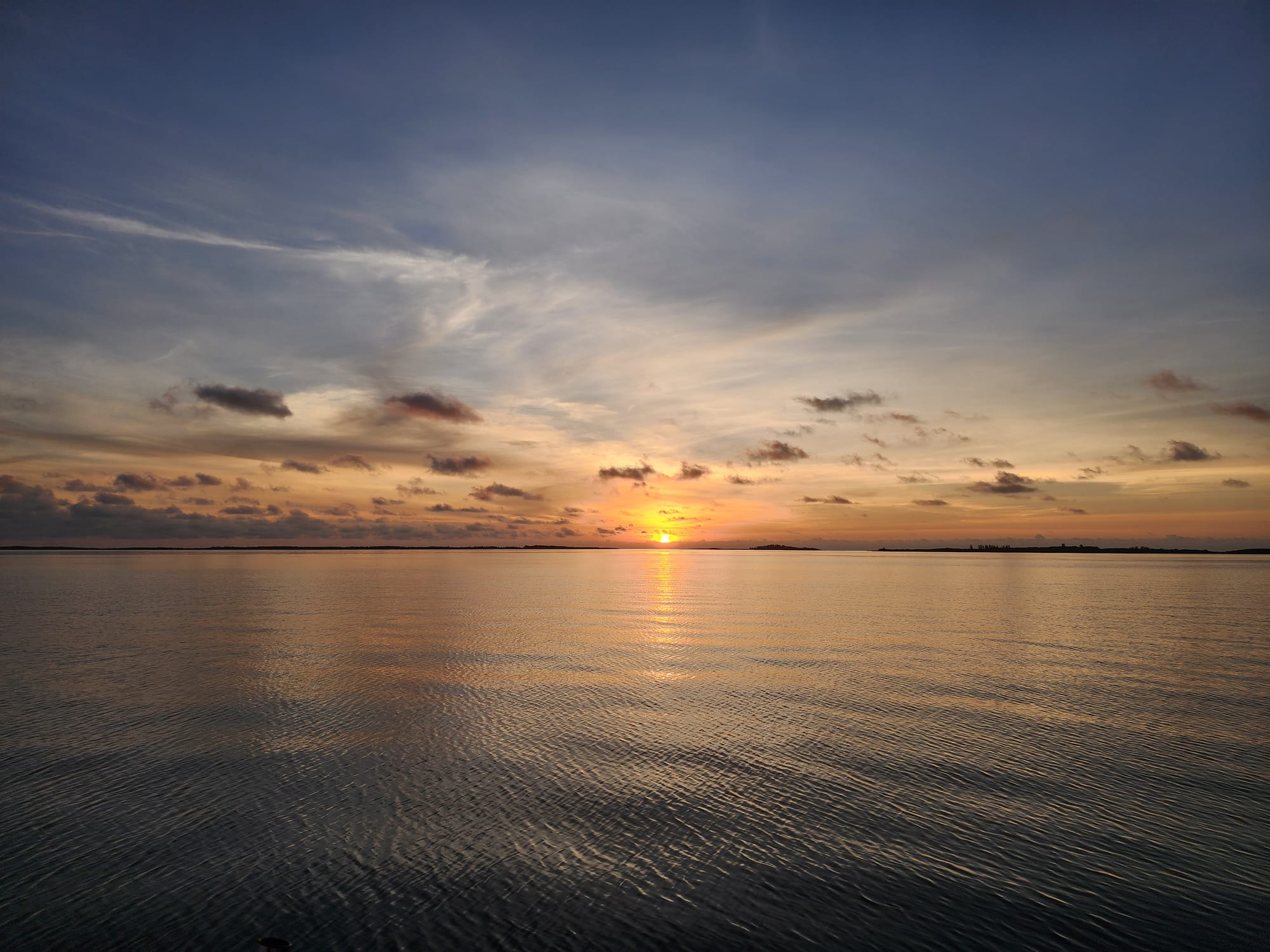
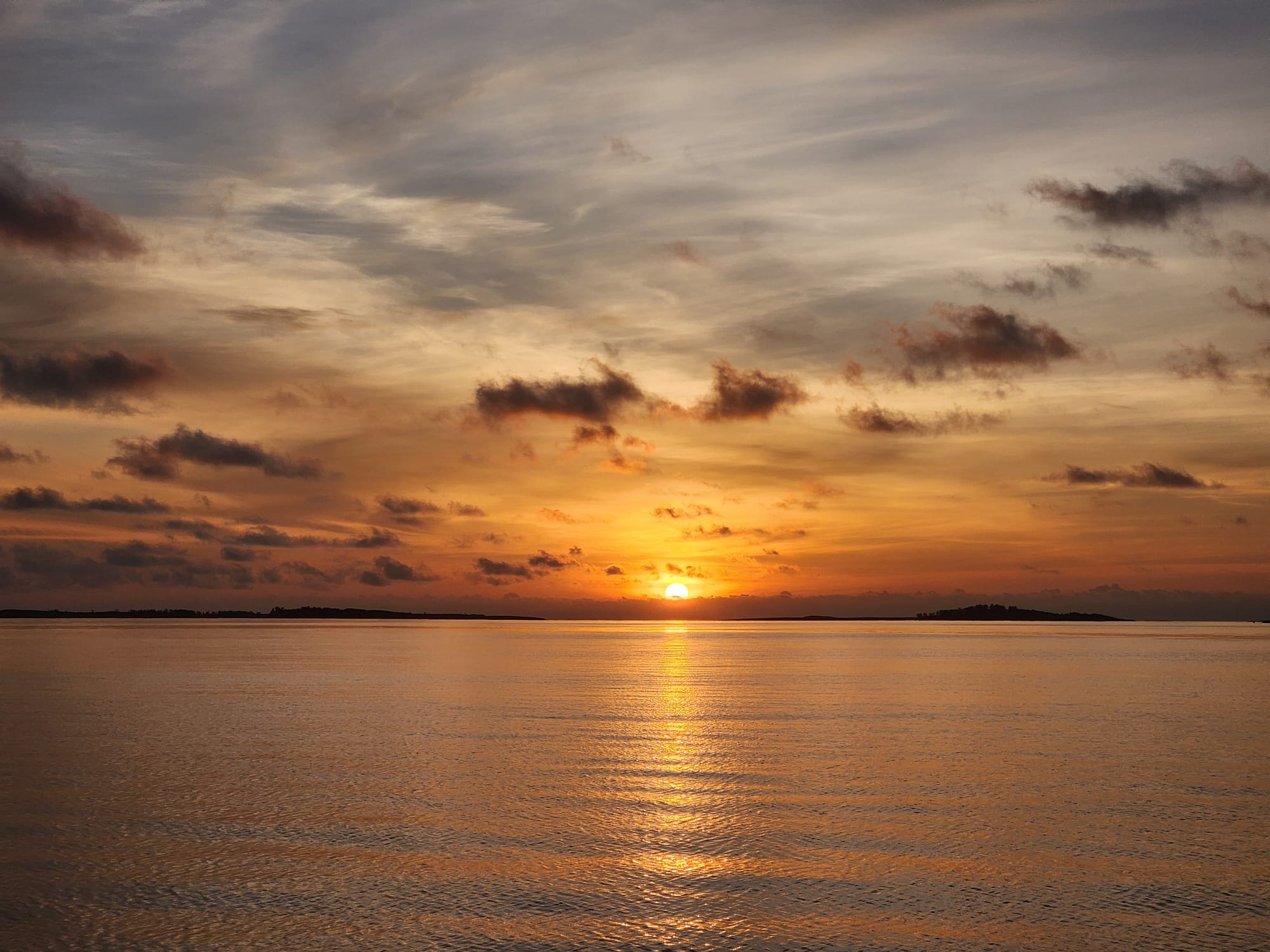
Sunset near the Abacos
Just before sunset, we made the decision to duck in to the large bay at Abaco Island, and drop anchor for the night. In the morning, we would motor north in the bay to a marina where we could fuel up.
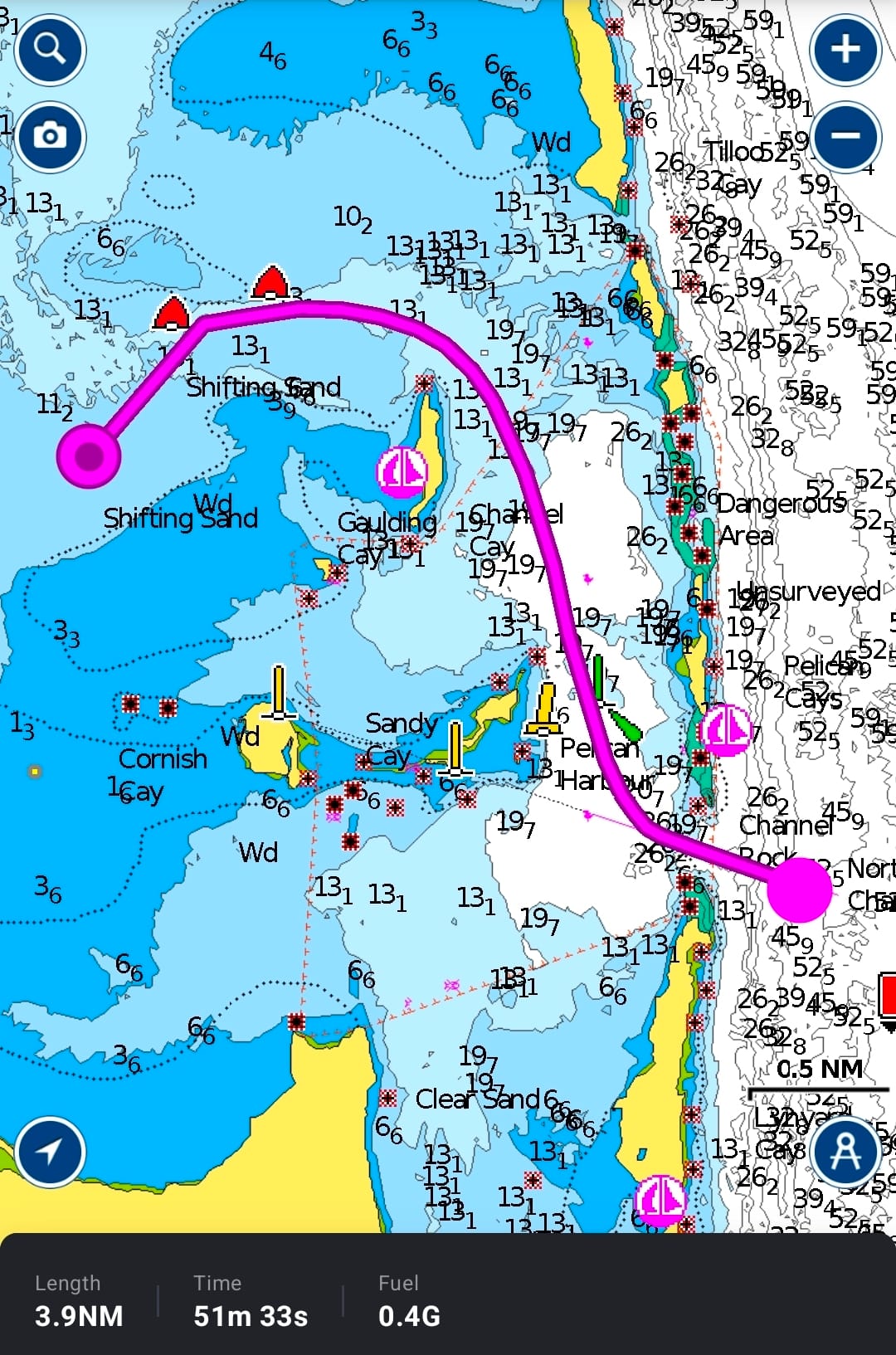
We arrived at the cut into the bay at last light. We had about 4 miles to go until we reached the anchorage, around 1 hour. It's shallow and there are lots of possible obstacles to avoid. The boat doesn't have headlights, so we deployed the Intelligent Autonomous Lighting and Communications System (IALCS). The IALCS is very expensive and high maintenance, but it's critical to have on board!
Ok, fine, the IALCS is Sue and me standing at the bow with a flood light and with Bluetooth headsets to tell Adrian what we were seeing and which direction to steer.
The map indicated that there would be buoys, channel markers, and lighted beacons along the way. As is common in the Bahamas, the map is asprirational. None of the noted markers actually existed.
We could only see about 5-10 meters in front of the boat. This meant that we had to scan the waters constantly. Standing at the bow for an hour and maintaining a sharp focus on our surroundings was physically and mentally tiring.
Eventually, we arrived at our selected anchor spot. Anchor down, Adrian put the engines in reverse to ensure that the anchor set into the sandy bottom and wouldn't drag. Engines off, we went to bed around 11pm. It was a very long day, and not the way we had envisioned our passage to Bermuda starting.
But, we were happy about our plan for tomorrow, and continuing onward to Bermuda, so all was well.