First sail on SV Andira
As Madonna sang, "Like a virgin, sailing for the very first time..." I'm sure it's something like that. That song is old, and so am I, so it's hard to know for sure.
We had a leisurely morning, having breakfast and coffee/tea as usual. Checking the weather, the conditions were as forecast, a very nice surprise for once - winds out of the south around 15 knots.
With our planned route to the northeast, that would put the apparent winds almost exactly on the beam (directly on the side of the boat). That's where most boats have the best sailing performance.
It didn't take long to go through the pre-sail checklist, even with them teaching me their process. Everything is familiar, but different enough from our old boat that you have to pay attention to where things are and how to operate them properly.
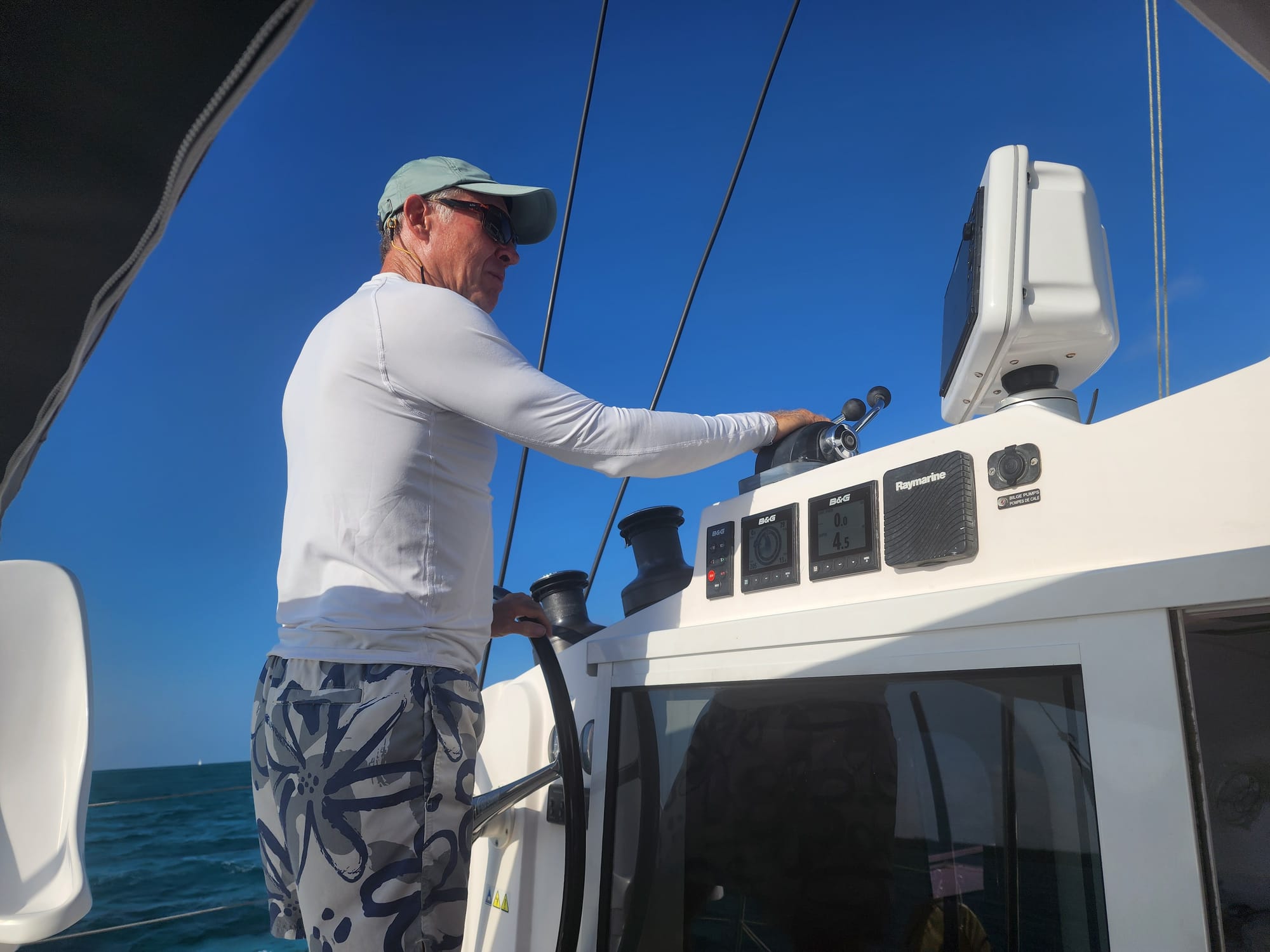
With engines on and Adrian at the helm, I followed Sue forward to observe and assist with raising the anchor and getting the bridle secure.
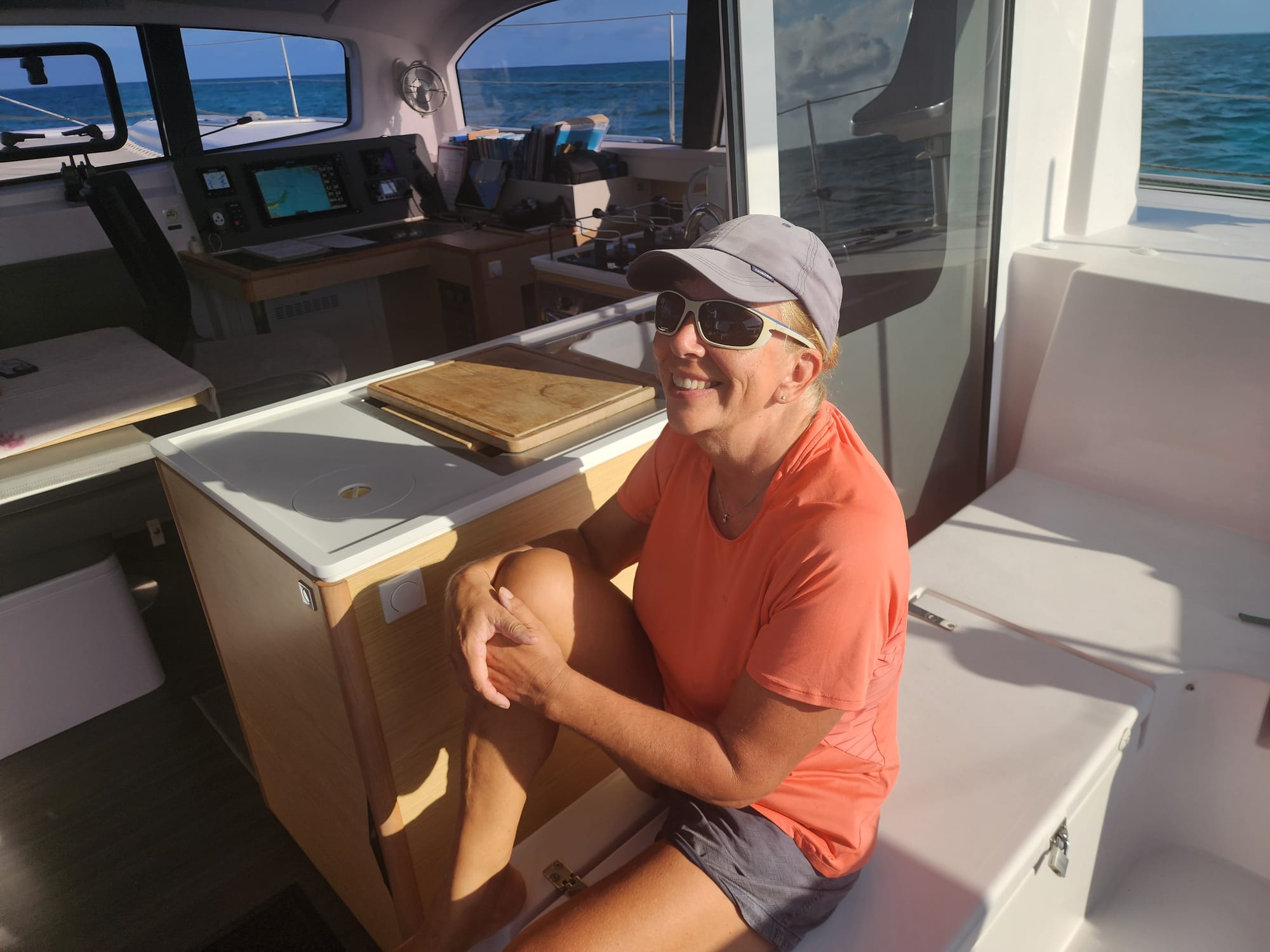
Once that was done, Adrian started motoring out of the bay, through the recommended channel between the reefs, and out into deeper water.
There were a few boats around, so we carefully picked a spot to turn toward the south, directly into the wind, so that we could raise the mainsail. Their sail is much lighter than ours was (and made of a fancier material). It went up easily, just requiring a little bit of work to keep lines from getting tangled.
With the mainsail up, it was time to unfurl the headsail. We had a Genoa on our boat, a big headsail that reaches back past the mast. Andira has a self-tacking staysail that stays entirely in front of the mast. As Adrian steered us just a few degrees from dead upwind, the mainsail caught the wind and we started moving forward. Quickly! This boat (an Outremer 45) is a performance catamaran, it wants to go fast!
With the wind blowing over the port bow, the staysail unfurled smoothly, and we gained speed yet again.
To follow our route, we needed to turn north, 180 degrees from where we were facing. As the wind started hitting the side of the boat, zip zoom zang! We were off! And so were the engines. We managed to sail the vast majority of the passage, only using the engines when leaving and arriving at the anchorage, and for a brief moment to lower the mainsail.
It took a bit to trim the sails for the wind direction, but before we knew it we were doing 8-10 knots. Later on, the winds died down and shifted behind the beam, but we were still doing 7-8 knots. In our old boat, we would maybe be doing 5-6 knots in these conditions.
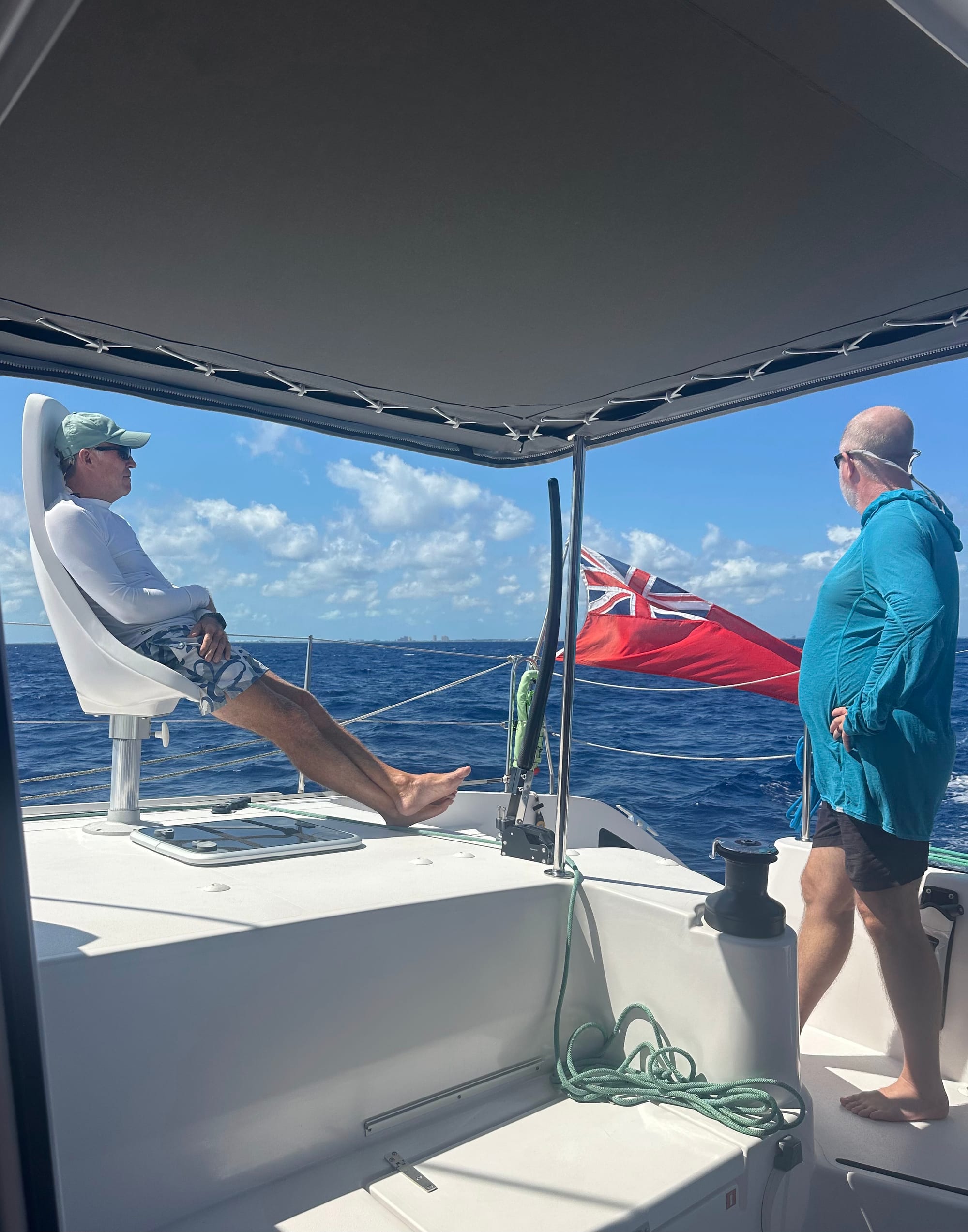
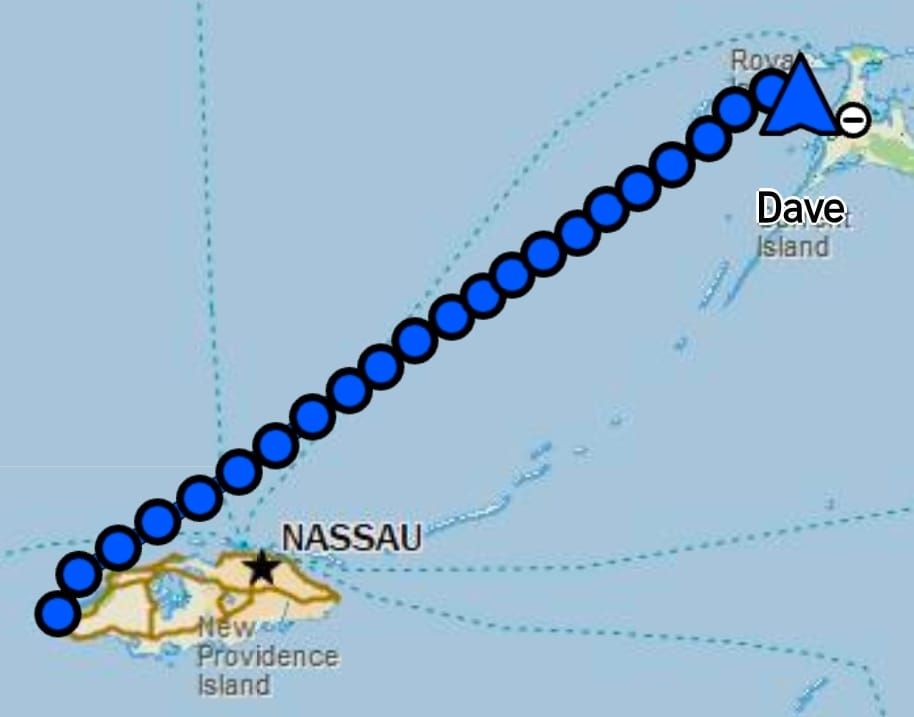
We had a bit of excitement as we sailed past Nassau Harbor. A sailboat was heading north and crossing our path. The chartplotter said that we would likely come within 100 meters of them, so we turned slightly to starboard to make sure that we passed safely behind them. "Crisis" averted.
Then we had a LOT of excitement. A medium sized container ship heading straight across our path into Nassau Harbor. It was going 10 knots. The chartplotter said that it would come within 25 meters of us, and we couldn't easily adjust our heading to avoid it. Technically, it should be avoiding us according to COLREGS (the international rules of navigation), but we would much rather be happy than right.
In an effort to figure out what the captain wanted to do, Adrian hailed the ship on VHF channel 16. There was no response, so he waited a few minutes and tried again. No response. He waited and tried again. And again. Silence. This is very unusual. And this is what we saw as it was approaching us.
Thankfully, the wind speed increased a little, giving us a boost of speed. Enough for us to pass safely (and nervously) in front of it.
It ended up going behind us by just 0.25 nautical miles. Unnecessarily close. The ship didn't change direction or slow down until it entered the harbor. Crisis avoided, I suppose. Later, we heard something fairly shocking: cursing on VHF channel 16. Of the many rules commonly broken by people using VHF radio, this one is never tolerated. One captain was berating another for not paying attention and nearly getting into a head on collision. We don't know if this was related to the ship we had a close encounter with. None of us could believe what we were hearing. Scandalous!
As we continued northeast, moving away from the island, the sea state got rougher. It wasn't too bad, still well under 2 meters, but the boat was moving around more. The autopilot did a great job of keeping us on course.
As the boat rocked back and forth in the swell, we could hear a squeaking noise emanating from the boom. Adrian and I went forward to the mast to look and listen in order to see if we could determine where it was coming from. It didn't take long for us to decide that it was from the gooseneck - a double hinged mechanism that connects the boom to the mast. It allows the boom to swing left to right as well as up and down.
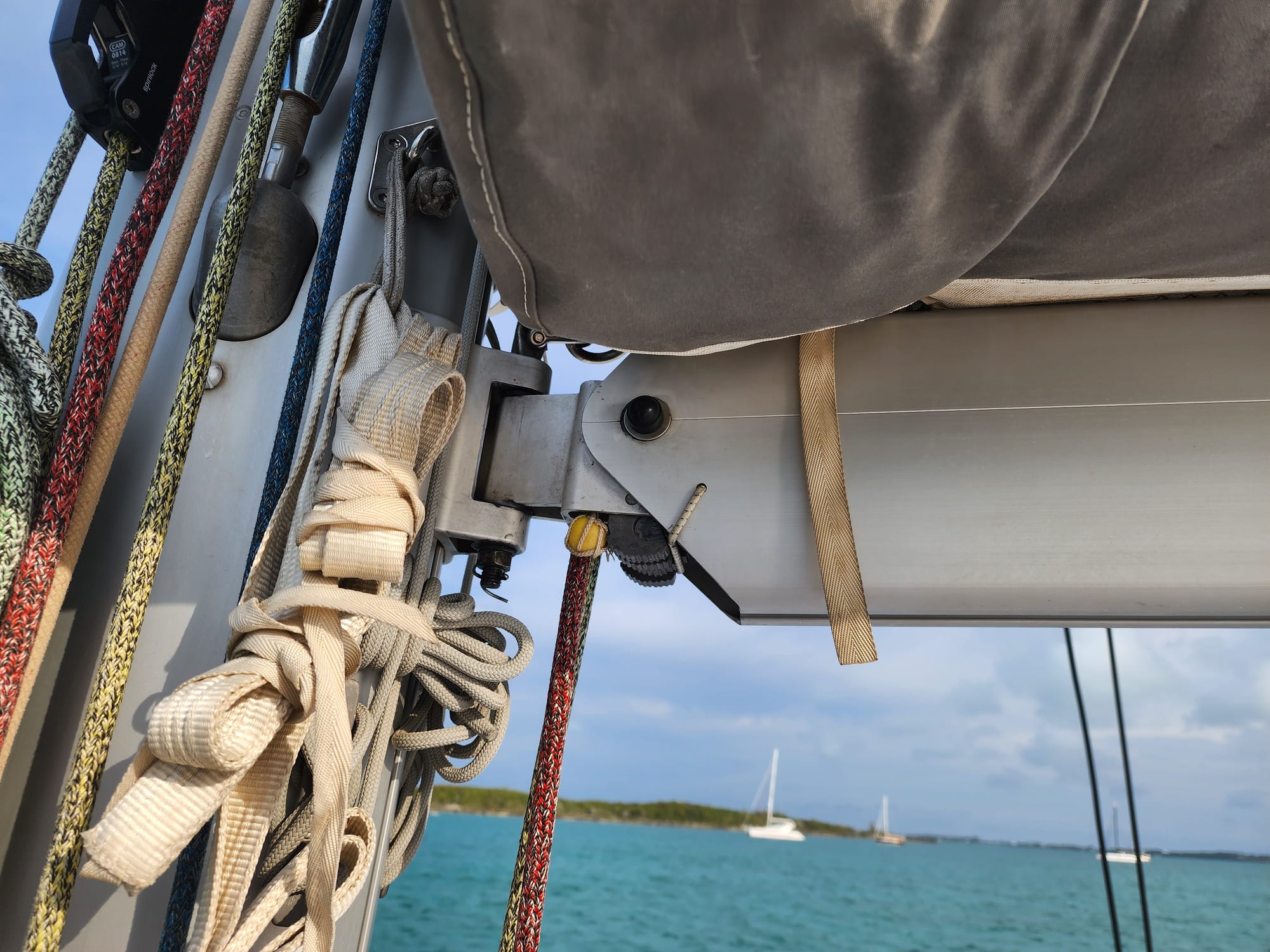
Adrian knew what he needed to do to silence the squeak and leapt into action. He applied some lubricant to the hinge points, and very slightly loosened a bolt that had been overtightened. Finally, we could sail hearing only the wind in the sails and the water under the hulls.
As we continued our journey, we were surprised at how few boats were out sailing. These conditions were nearly perfect. There was one monohull behind us, but we lost sight of them in a few hours. Maybe other boats were out sailing, but going further west or north.
Being a performance catamaran, Andira doesn't have keels. Instead, she has daggerboards. These are fairly long, and they act like airplane wings in the water, allowing the boat to resist the sideways force of the wind when they are lowered. When raised (as shown below), they reduce how deep the boat is, allowing us to travel and anchor in shallower waters.
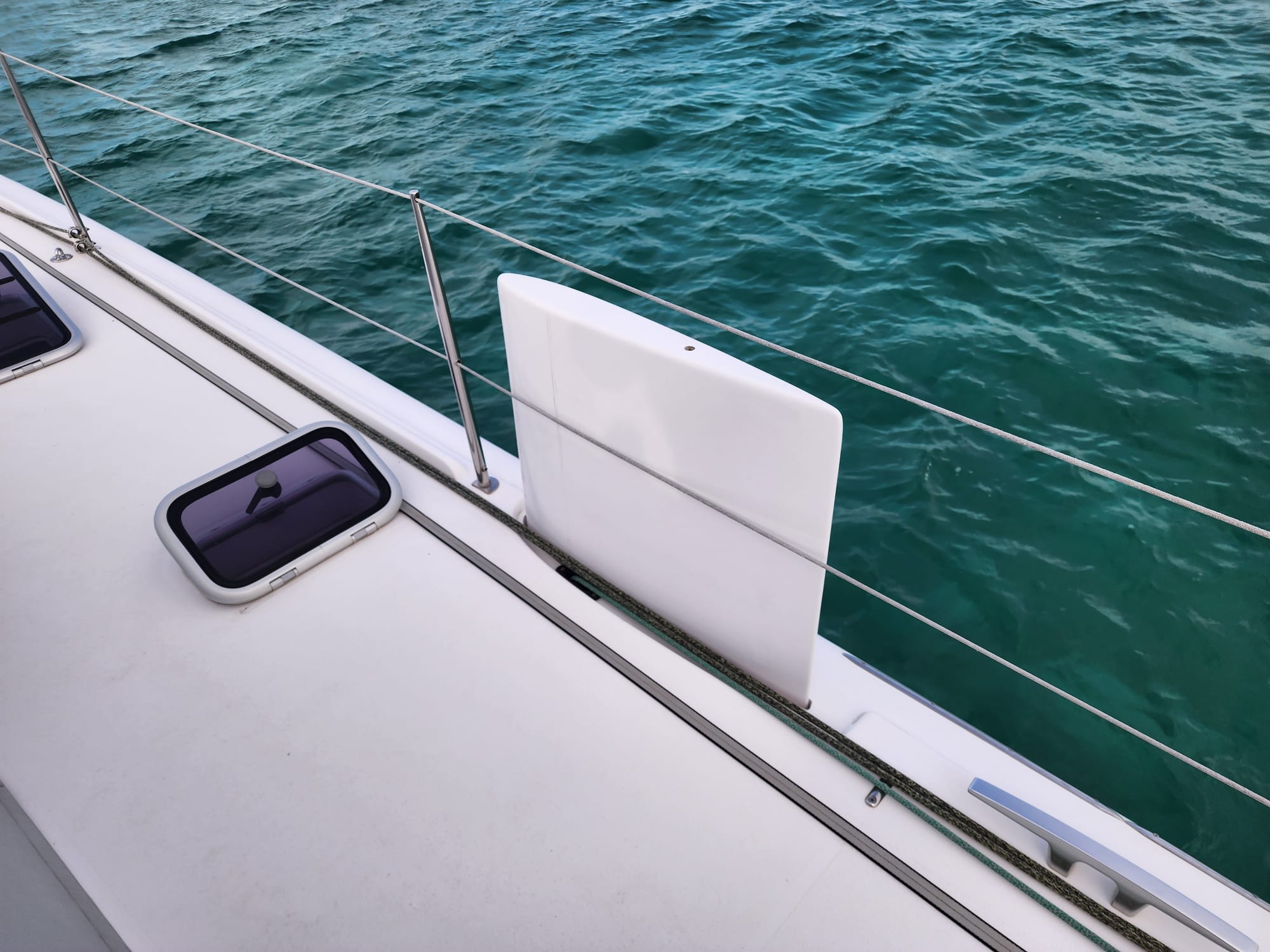
Early on, we had lowered one of the daggerboards to help us steer directly toward our destination, and to keep the best wind angle. Later, as the wind shifted behind us, we raised the daggerboard, turning the boat more to the east to get a better wind angle, and allowing the boat to slip sideways (crabbing) towards our destination. This is a neat trick that would have been useful on our old boat.
The last 10 or so nautical miles were going to be over shallow waters with lots of obstacles. There were a few options available for traversing this stretch, and we settled on one that had us going a safe speed while using minimal fuel.
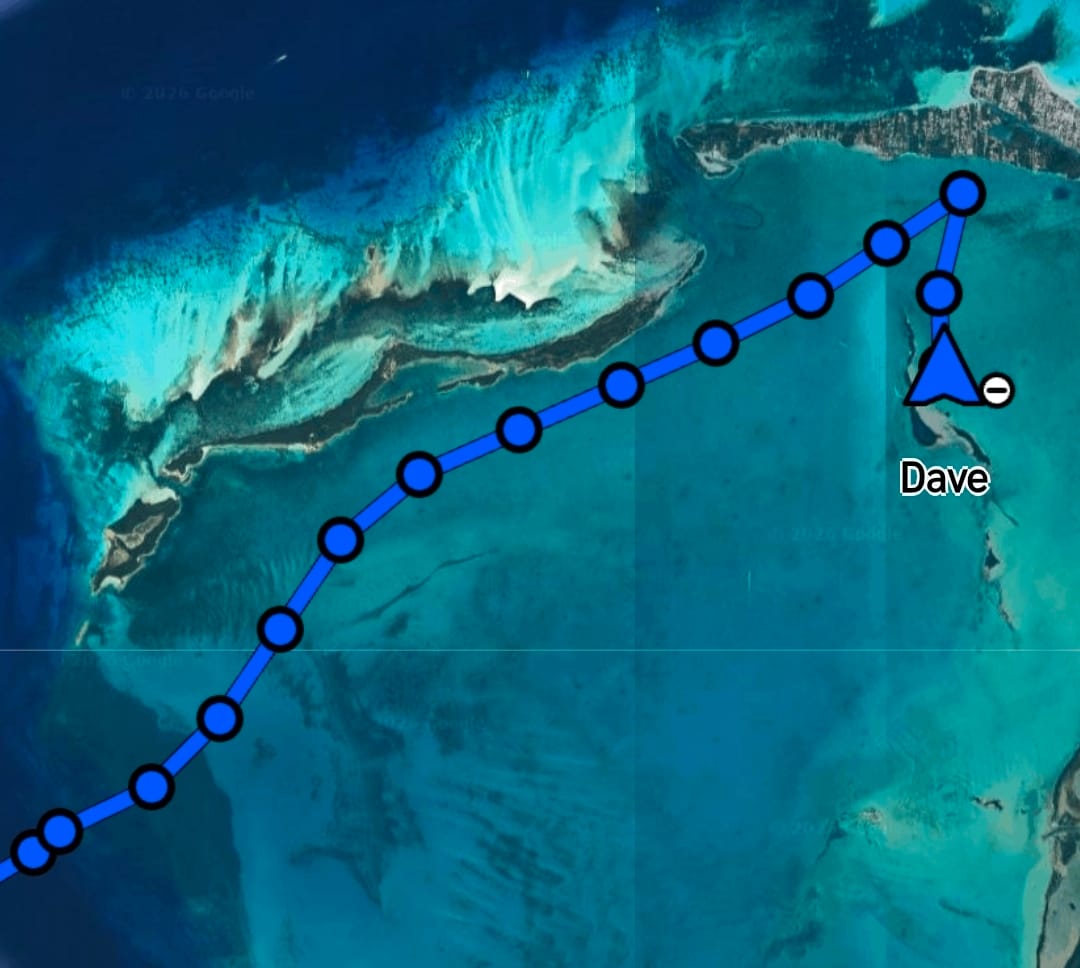
We dropped the mainsail while in deep water, using the engines to point the bow into the wind, and then proceeded into the shallows with just the headsail, daggerboards up.
This slowed us down to 4-5 knots, a much more reasonable speed for the conditions. I stood at the bow, with a Bluetooth headset on, relaying information about what I was seeing, helping Adrian find a clear path through. It took us 2 hours to get through the last part, but we encountered no issues.
We did encounter a single dolphin! It came over to check us out for a little while, then turned and went back to looking for fish, or for a partner, or whatever a solitary dolphin does.
I should note that it blew my mind that we were easily doing 5 knots on just the headsail. Our old boat would never have done this.
Even so, 10 miles is a long way, and standing at the bow looking intently for obstacles for 2 hours is pretty tiring.
Once we reached Spanish Wells, we furled the headsail and started looking for a good spot to anchor. Once again, I helped Sue up front with the anchoring process.
With the anchor down, we put the boat to sleep. Lines had to be coiled and stowed, covers placed on chartplotters and winches, anchor alarm enable, the boom secured so that it wont swing, etc.
As a final step, Adrian donned his snorkel gear and swam out to check anchor. He found that it hadn't set as well as we would like. While he stayed out there, I turned engines back on and gently put them in reverse, slowly increasing the RPMs to get the anchor to dig in deeper. He watched as it buried itself and gave us the thumbs-up.
With that all settled, it was time to crack open the "We're here beer"! A well deserved treat after a full day of sailing.
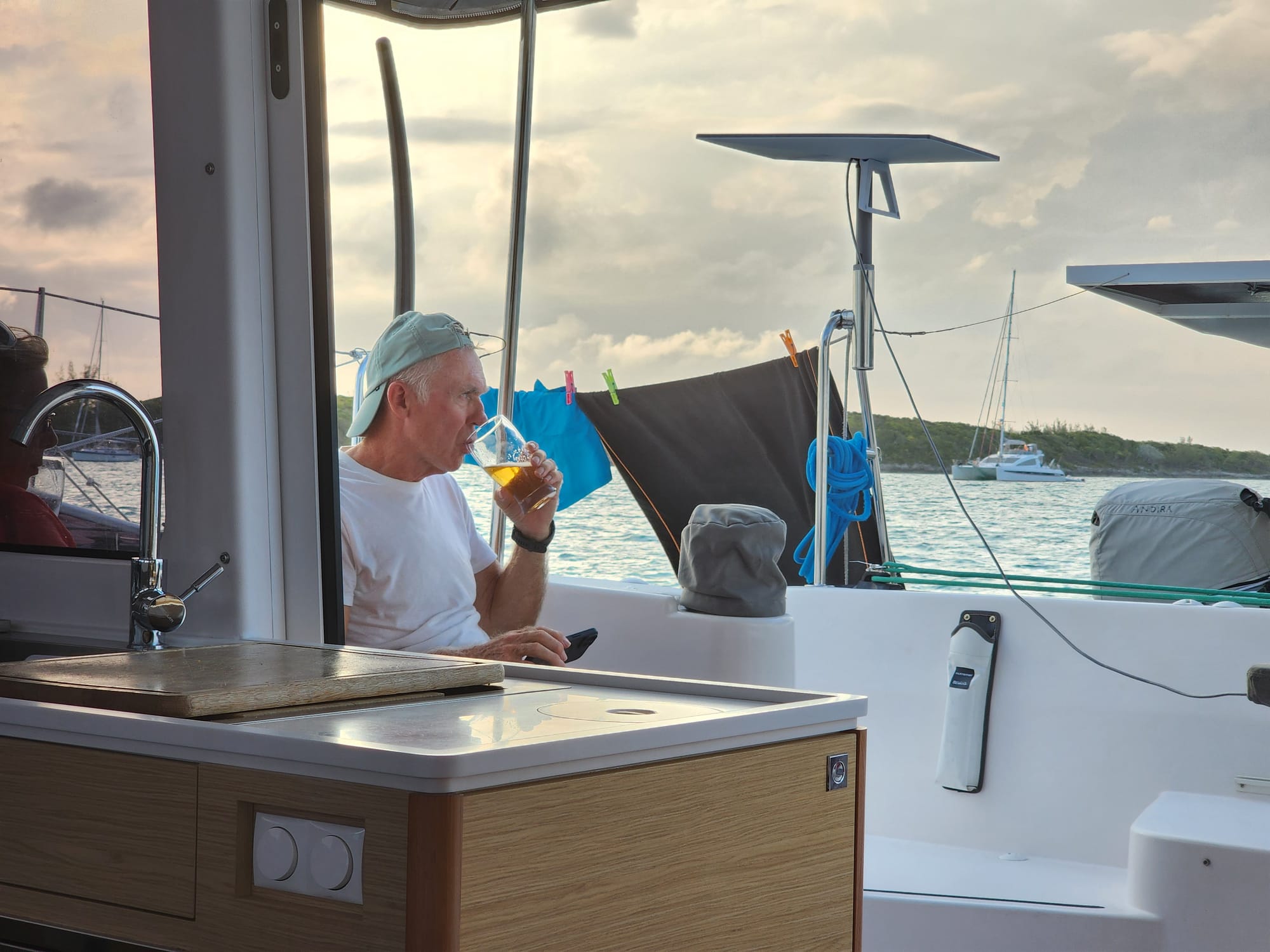
And as the perfect finish to a great day, we enjoyed some apple pie after dinner. Sadly, I didn't think to take a picture before we dug in...
With phase 1 (of 4) complete, now we are planning for phase 2: Bahamas to Bermuda. It's looking like we might find a weather window around the middle of next week. Stay tuned!